


SHOULD WE LEAVE OUR ART ALONE?
- Dollie Swaim

- Aug 24, 2024
- 8 min read
Updated: Aug 16
I used to feel incredibly committed to editing anything I created, spending sleepless nights changing guitar parts or adding detail to a painting that probably only one or two people were ever going to see. I was hardworking, sure, but for what? I hardly ever got to a point where I was really happy with what I had made. Usually, there was just a point where I would fall asleep at the counter. Looking back on it, I think I was more obsessive than diligent.
This is why I pose the question: should we leave our art alone? Is there a line to be crossed with editing, where what you're working on is no longer the thing you started with? My most recent creation that this applies to is an album called Camaro, a body of work that I released last year on October 13th, 2023, and then rereleased almost a year later on August 28th, 2024 after a substantial amount of editing. Some listeners report missing the raw, unedited quality of the original album, but the sloppiness of the production is precisely what prompted me to delete it.
If the audience is (supposedly) happy with the media they're consuming, then who is the artist to take it away from them? But then, on the other hand, who is the audience to judge the artist's end goal of perfection? And finally, is perfection even achievable? Let's get into it.

I don't trust my own judgment, nor do I have much faith in the judgment of others, especially as it pertains to my own creative endeavors. This sometimes leads me to form biased, harsh opinions of myself and my work, and while I am acutely aware of my own self-consciousness, the fact remains that the original album was not great.
The root of the Camaro I's shortcomings stemmed from an unrealistic deadline, which led me to write songs to fill gaps in the succession of the collection instead of writing songs that were good on their own. This is something you should never ever (ever ever) do. And because I neglected the appeal of each individual song, I started to pick each one apart shortly after the album was released.
Now, this is where I feel that I crossed the line from necessary corrections to obsessions. I listened to the first song on the album on an endless loop and, in the process of trying to convince myself that it was fine and I should leave it alone, found more and more things to pick at. There were truly some aspects of the production that should've been changed simply from a professional standpoint, but I scrutinized my guitar parts, my vocals, my enunciation, and my lyrics, all of which were mostly fine looking back on it.
This ruined the album for me. If I had had a little self-control and hadn't constantly streamed my own work to find something wrong with it (I was my own top artist in 2023... help me) I probably would've still done some editing, but it would've been in refining the production and rereleasing it in the new year as a "remastered" edition. Obsessing over every detail, however, put a bad taste in my mouth about the whole thing. The new Camaro, which came out in August of this year, has only one of the original songs on it, and even that was shortened to an interlude.
And although I do like the new version significantly more than the original (I like the lyrics; I like my vocals & production; it's just objectively better), I wonder sometimes if I'm deludedly preoccupied. After all, before I started doing my own production, I didn't really pay attention to how much reverb or how bass-y my favorite songs were. I just liked them for the melody and for what they said, something that I think was well done even in the first version of Camaro. If it doesn't matter to the audience, why the hell should it matter to me?
But then, am I making my music for the audience or am I making music for myself? I'd like to assume the latter, but sometimes it's better to listen to a supportive friend over your harsh, rash, shitty inner critic.

Speaking of the supportive friend, enter Zenya Bian, professionally known in the music world as ZentoBox, pictured left sitting at the piano at my family's house in San Diego. I'm holding a guitar, but all you can see of me is the back of my head.
At the time of this interview, we were sitting at the dining table in the apartment we share; she was eating a burrito and I was having a sub-par spicy tuna bowl. I recorded the interview so that I wouldn't feel pressured to take notes during our conversation, and the first minute and 27 seconds is a record of us bickering about nothing.
Swaim: Okay, so this article that I'm writing-- there's like four edamame in here.
Bian: That's like fourteen.
Swaim: Wrong. Okay, it's about how much you can edit your own work, or about how much you think you should. When you make something, we're talking music, do you go back and change it a lot?
Bian: When you're making art or music or whatever, you're starting from a blank canvas, right? You're just adding and adding and adding, and eventually, you can get stuck in this groove of hearing the same thing over and over again. I go back and change things quite a bit, but it's after I've taken some time; the line is drawn, I think, is when you're obsessing and obsessing over something without really giving it a chance to breathe and be what it's gonna be. But if you're level-headed and know what you're doing, there's no problem with changing things, even in large amounts.
Zenya has always had a much less dramatic way of thinking about things than I do. Put like this, it sounds so simple; it reads like stereo instructions. She tells me about a song she was working on recently that started out as rock and slowly evolved into electro-pop, which she says she likes much better. I ask her if she misses the original, and she tells me that the original just wasn't good. I ask her if she cares if anybody else would've liked the original, and she says no one else ever listened to it but her, so she doesn't care.
Bian: You can do whatever you want, there are a lot of artists that have taken all their old stuff down, and now you can only find it on, like, Soundcloud.
Swaim: Like Lana.
Bian: Yeah, like Lana. But for me, my ideology is-- I could take my old stuff down or take down the stuff I don't like and fix it, but I like having a record out there of my progress because, like, I wasn't instantly good at producing or singing and I want to be real about that. Nobody just magically knows how to use Logic or Ableton at 5 months old.
Swaim: So you'd rather just leave your stuff up, even if you don't like it? It doesn't haunt you? Or I guess you don't have the urge to change it?
Bian: Not really, I'd just rather keep making new things.
This is where we differ. Zenya is much more chill in this area of her life than I am. She tells me through bites of her burrito that you can change something as much as you want, but if you keep deleting something and reuploading it, eventually you can cross a line and get into obsessive territory. Balance is necessary, but there aren't any rules. There aren't any explicit ones, at least.
There are situational rules, sure-- if you're signed to a label, usually you're not allowed to move things around the way you want when it comes to editing and deleting and re-releasing. But if you're in control of your stuff, you need to do what feels the best for you, or so Zenya says. It sounds so simple when she puts it like that, sitting across from me while the sounds of us eating overpower our voices in my recording; you should do what you want to do, and if you feel obsessive or powerless in your creation, ask for advice. If someone gives you advice you don't want, don't take it.
Swaim: How much, if at all, are you considering the consumer market when you make these decisions? Like, are you anticipating what other people are going to think when you make a song or choose a cover or anything like that?
Bian: I think it's very hard in this day and age to not think about your consumer market; music is so commodified, like, whether you get signed or not is based on how many listeners you already have. Especially if you plan on doing music as a career, you kind of have to cater to that. I'm very much in the STEM field now so I'm not banking on making money from music, and in a lot of ways I feel like that's been helpful for me because I'm not obsessing over whether or not the vibes are right or whether I'm using trendy sounds. I'm just making what I want to make, and I feel good about it.
We also speak briefly about a shared hatred we have in the song ABCDEFU by Gayle, and how even if we had the streams to our name or got in the Billboard top 100 because of a song like that, we wouldn't be able to live with something so trashy and blatantly label-manufactured in our discography. Big talk from a couple of indescribably small artists, I know, but I think opinions like these are the ones that matter in music production, in situations where you can either sacrifice your vision and craft a 5-second clip of a song that goes viral or stay true to the sounds you actually enjoy.
The important takeaway from this, I think, is not to not make songs like ABCDEFU. If that kind of music speaks to you, then actually, you absolutely should make songs like that. The detrimental sin is making music you don't like.
What spoke to me a year ago was to delete an EP that I worked insanely hard on for several months, lose all those streams, and edit it until I was satisfied enough to re-release it. And I'm very happy I took the time to let it grow with me and progress as a fluid project.
I do rethink this sometimes (as I do everything), when someone says, "What happened to the original?", but what matters to me now is that I like it; there was some obsessiveness there when I was hating on my own work, which is something I recognize that I need to work on, but even if I hadn't gotten so wrapped up in that, I think I still would've ended up changing what I was doing. My conversation with Zenya made me feel much freer than I once did about making these kinds of decisions, knowing that you can do anything you want to as long as it's a somewhat balanced approach. It's your art; you should do with it what you want.
Hopefully, I'll continue to like it. If not I'm sure there'll be a Camaro III.
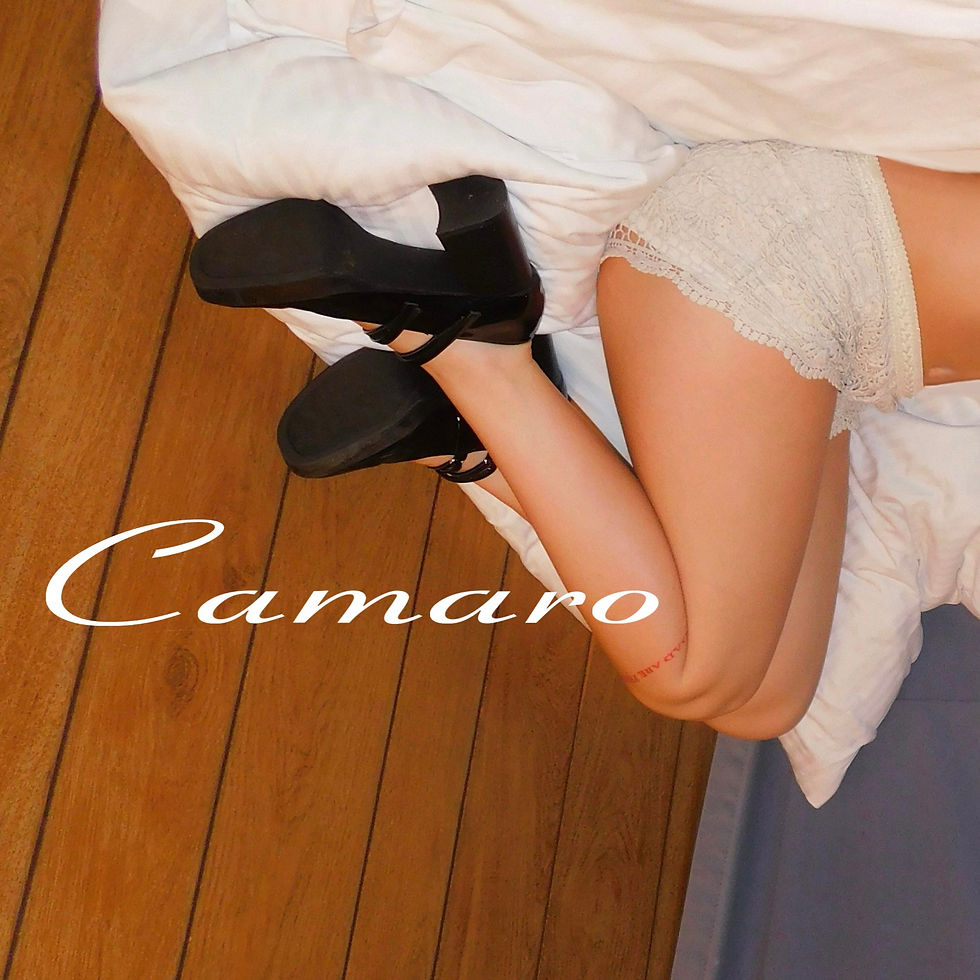
If you'd like to check it out for yourself, you can click here to find all my music. This is for the purpose of the article, not a shameless self-plug. Kind of.


Hi Dollie! I really enjoyed reading this blog post! Your thoughts and feelings on the intersection between artistic perfectionism and personal satisfaction was very thought-provoking and interesting to read about. I'm not particularly creative myself, so I've never really encountered this same problem, but I understand your viewpoint. There's a real tension between respecting your own vision and succumbing to a cycle of obsessive revisions--ones that can potentially leave you disconnected from your initial ideas. I really liked how you described the loop of endless self-doubt, but ultimately, you still recognize that the new version of your album feels more polished and objectively better. Zenya's perspective was also cool to read about because it offered another voice on this opinion.…
Hi, Dollie! Hope this message finds you well! I greatly enjoyed reading your first blog post! I really admired the vulnerability you were able to develop throughout the piece, and appreciated the thought-provoking, introspective, and emotive dissection of your own work that you were able to provide. I remember you saying on the first day of class that you released your own music, so it was very fun to get a bit of a peek into your artistic approach through your self-analysis of your album Camaro. I am so sorry to hear that you were initially so dissatisfied with how the project turned out, but I hope you do not feel alone in having your perfectionism become self-damaging. Admittedly,…